Alex Hughes: Graduating as a graphic designer in 2025
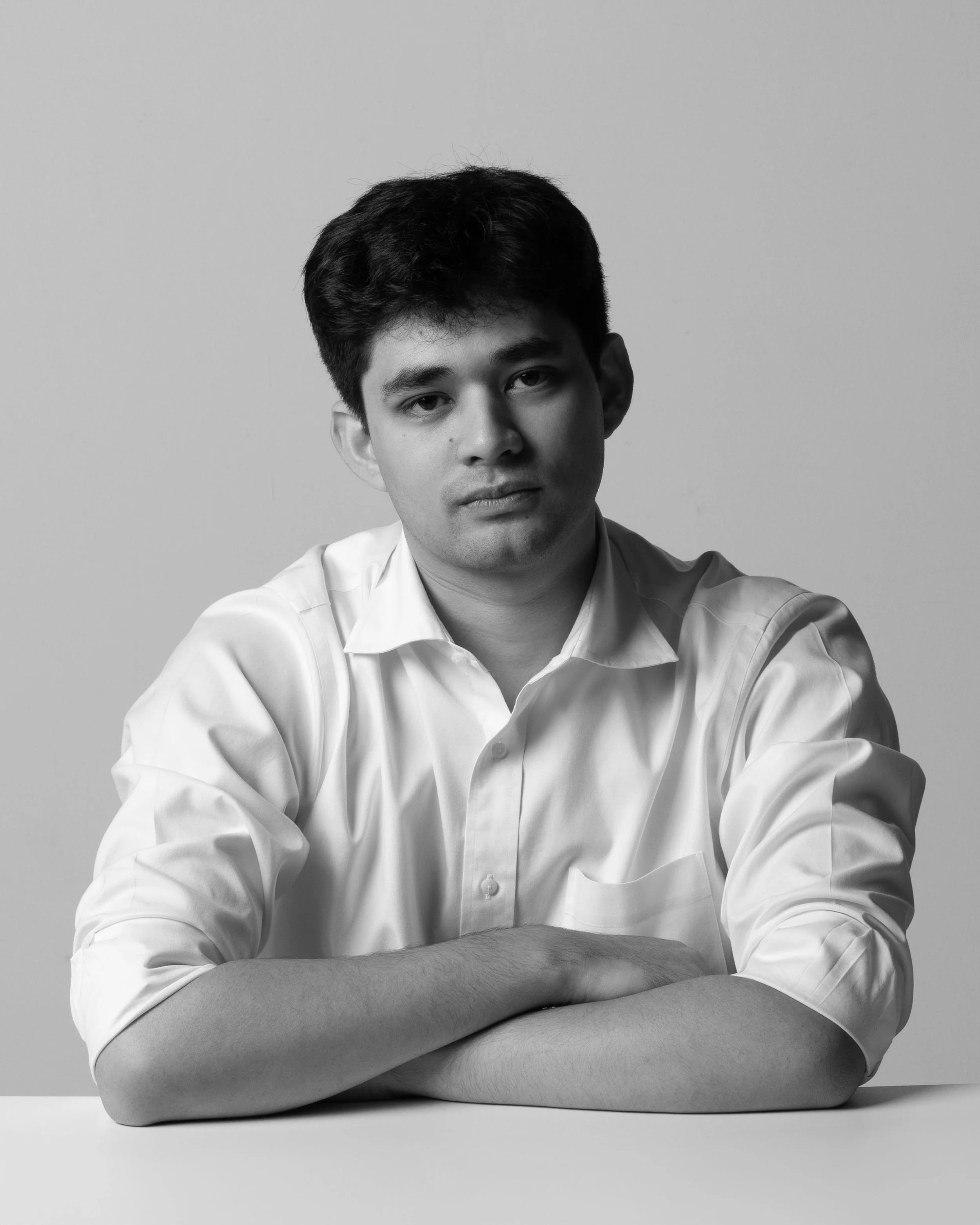
Alex Hughes is a designer shaped by life in the UK and Japan, bringing curiosity and clarity to every project. He values accessibility, experimentation, and the magic moment when clients understand his vision. Here, he shares the lessons, quirks, and hopes guiding his evolving creative path.
What’s the most straightforward way to explain who you are and what you do?
I’m a graphic designer finding my footing in the professional industry. Right now, I move between studios around the UK and Japan, absorbing new perspectives, techniques and learning from the amazing professionals in the industry and immersing myself in the world of design.
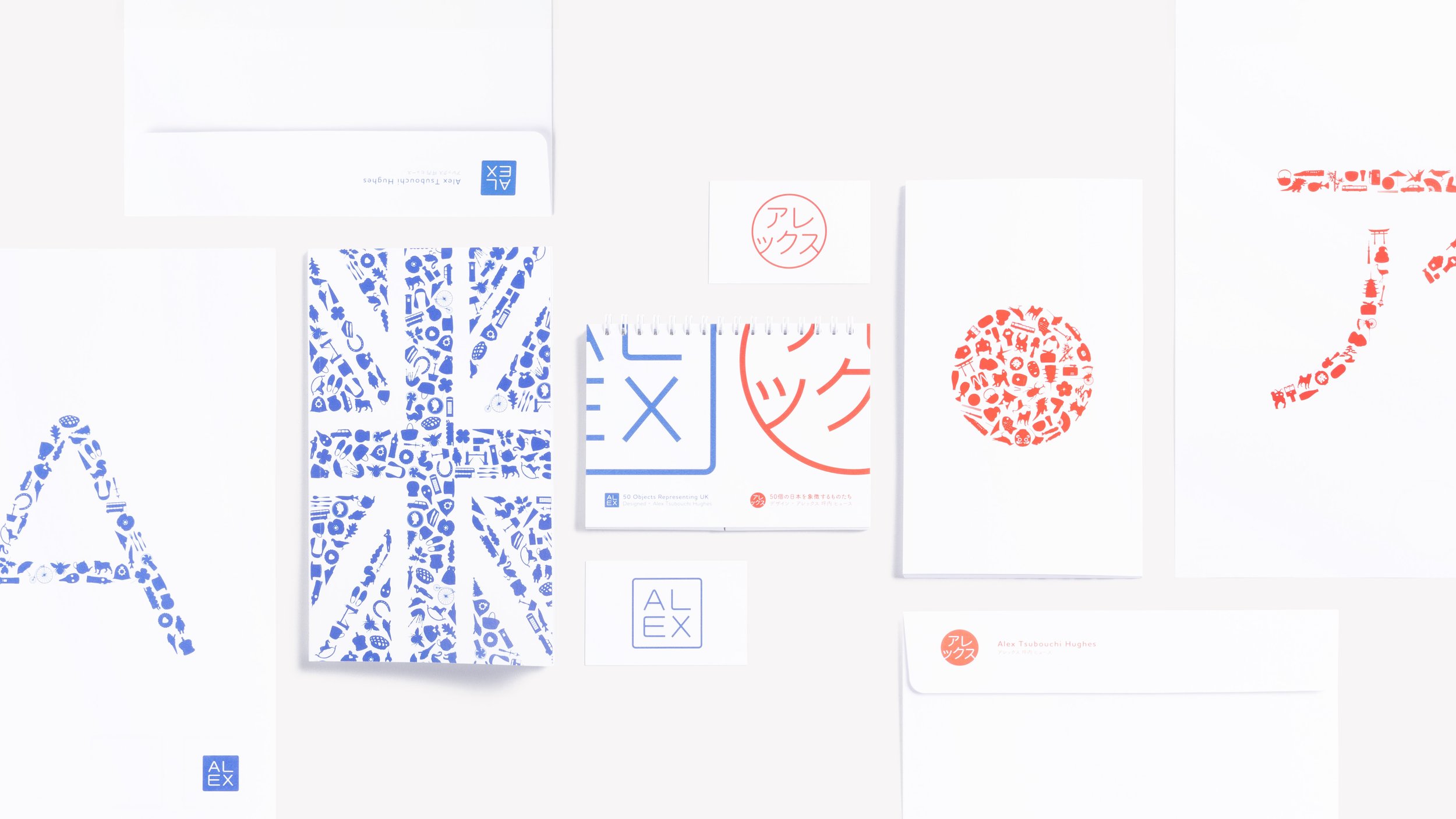
Alongside this, I craft portfolio pieces to share with others. One of my recent projects, A British & Japanese Hello, included a book showcasing various dialects of saying “hello” in both Britain and Japan. It proved a great success, connecting me with lots of new really cool designers, and helping me strengthen my ties to the creative community I love and something I hope to keep growing throughout my career. Building these long lasting relationships is something I value deeply, both personally and as a way to become a better designer.
What assumptions do people make about you? How right are they?
I’m incredibly fortunate to be surrounded by people who support me and believe in my goals. However when I talk about graphic design, I sometimes notice that people see it as something I do purely for enjoyment almost like a hobby. There is truth in that, because design is the one thing that genuinely makes me happy. Although saying I “enjoy” it doesn’t give the full picture.
Every project, whether small or large, is a process of experimentation, research, frustration, trial and error, and constant refinement. It can be gruelling and there are moments I absolutely hate but that difficult process is exactly what makes design meaningful for me. When you reach the final outcome, you see the value of all that labour not just in how it looks, but in how it communicates, connects, or solves a real problem.
So yes, I design because I love it. But more importantly, I design because it feels like something that can make a real difference. This is what I hope people see in me as I continue growing in this path.
What’s your background to get you to where you are today?
I grew up between two cultures though not in the way most people expect. My Japanese and English heritage is a big part of who I am, but the influences that shaped me most are the two very different worlds my parents come from, the financial world of my father’s side, and the creative energy of my mother’s side.
For as long as I can remember, I wanted to be a fine artist. I was inspired by my Japanese grandfather’s architectural and carpentry work, and by my mother’s interior design projects. As I grew older, I began to understand the financial challenges of pursuing fine art. By the age of fifteen, I was almost ready to give up on the idea of a creative career altogether.
Everything changed when I met my graphic design teacher in college. Suddenly, I discovered a path where I could be creative and still build a stable, sustainable career. My father, always emphasised the importance of financial awareness and understanding your clients fundings and creating enough money to invest in yourself. Even though money isn’t usually the first priority in the creative industry, his advice stayed with me.
During my summers, I worked various jobs in design studios and took on any odd jobs I could to earn an extra quid. I used that money to invest in my University projects comparing print methods, papers, and production costs to understand how to bring ideas to life within a realistic budget.
Now, as a working graphic designer, I continue to approach my practice in the same way. I take on jobs to learn clients needs in the real world, set aside funding for personal projects, and reinvest in experimenting with publications, posters, business cards, and new design ideas. My parent’s values of discipline, creativity, curiosity, and resourcefulness have shaped not only how I work, but the kind of designer I’ve become.
What excites you most about what you do?
Creating work that feels individual and thoughtfully designed is incredibly important to me, and seeing a project come together always brings me a real sense of joy. The part of the process that excites me the most is presenting the work to a client.
I’ve always believed that great graphic design often goes unnoticed not because it’s dull, but because it communicates so clearly that it feels natural. That idea can sound counterintuitive, and it’s not always what clients expect to hear. But to me, the role of a graphic designer is to understand a subject as if I am an expert and identify the essential elements and translate them into the most effective outcome. From the outside it may look simple, but in reality there’s an enormous amount of thought, exploration, and decision-making behind that simplicity.
That’s why presenting my projects are so rewarding. If you’ve done your job well, there comes a moment in the presentation where everything clicks and the client suddenly sees the logic, the craft, and the intention behind your solution. Watching that understanding land and seeing their appreciation shift, is one of the most energising moments in the entire process. It’s the moment you know you’ve created something that truly works.
Any tips for aspiring graphic designers?
We’re living in a time where there’s constant debate about AI and whether it might replace graphic designers or even the creative industry as a whole. For someone new wanting to start a career in this field, it can understandably feel like a worrying time.
Fear not, I don’t see AI as a threat to creativity. Yes, I occasionally use AI in my work, but at the end of the day it is simply a tool to help me become a better designer. No matter how impressive AI becomes, or whatever new technology appears next, the core of graphic design is creating something new, something no one else has imagined, that communicates a message effectively in a way only you could have come up with.
That can sound intimidating, even I struggle with it and continue to learn every day, but originality grows naturally. Stay passionate about your craft, engaged with the creative world around you, and pursue your interest. Your unique voice will appear and that is what will set your work apart and make you successful.
A niché question but an important one...How aware are you about accessibility?
Accessibility is one of the most important things to consider as a graphic designer. The official definition of graphic design is “the art of communicating an idea visually”. On the surface, that’s true but it doesn’t acknowledge the viewer. As designers, we need to recognise that our visual concepts might not be accessible to every person who encounters them. That’s why I believe a more accurate definition of graphic design is “the art of communicating an idea to the consumer”, whoever they are.
At the moment, my understanding of accessibility is rooted mainly in print. Creating physical pieces requires learning about papers, print methods, and production details. I think about things like whether a material is safe for children, how easily does the book binding opens for the reader, whether the paper and print is a legible format and all the small elements people rarely notice that make an object intuitive and enjoyable for the end user.
I’m at a point in my career where I’m starting to think seriously about how I can also translate what I do into digital formats. I want to make my work more accessible to the widest possible audience. To achieve this I’ve begun learning coding, video editing, and animation. These skills will allow me to bring my ideas into web and motion spaces. My goal is always the same, to create design that people can enjoy and to make it easy for everyone to understand.
And finally, What's the plan for you? Where you heading?
In the near future, I have many projects I’m excited to bring to life. I’m going to create a children’s book about endangered species, design art posters that can be enjoyed by people who are visually impaired, lead origami workshops that explore the history of the craft, and pursue many other ideas. Right now, I’m pushing myself to try new mediums and design styles so I can broaden my skills and build a strong backbone for what it means to be a designer.
In the long term, my hope is to find my place in the industry, to understand what works best for me and what feels realistically sustainable as I carve out my own path in the design world. It’s still a dream, but one day I hope to run my own design studio and contribute to the creative community that has supported and shaped me into the designer I am today.
Links: Keep up to date with Alex
Website - alexhughes.design