Meka Ugwu: Fine art to product designer
How does a fine arts background in Nigeria end up shaping a career in product design? In this conversation, Meka shares his insights on translating human needs into design, what accessibility looks like when you're building without a CMS budget, and how his career continues to evolve.
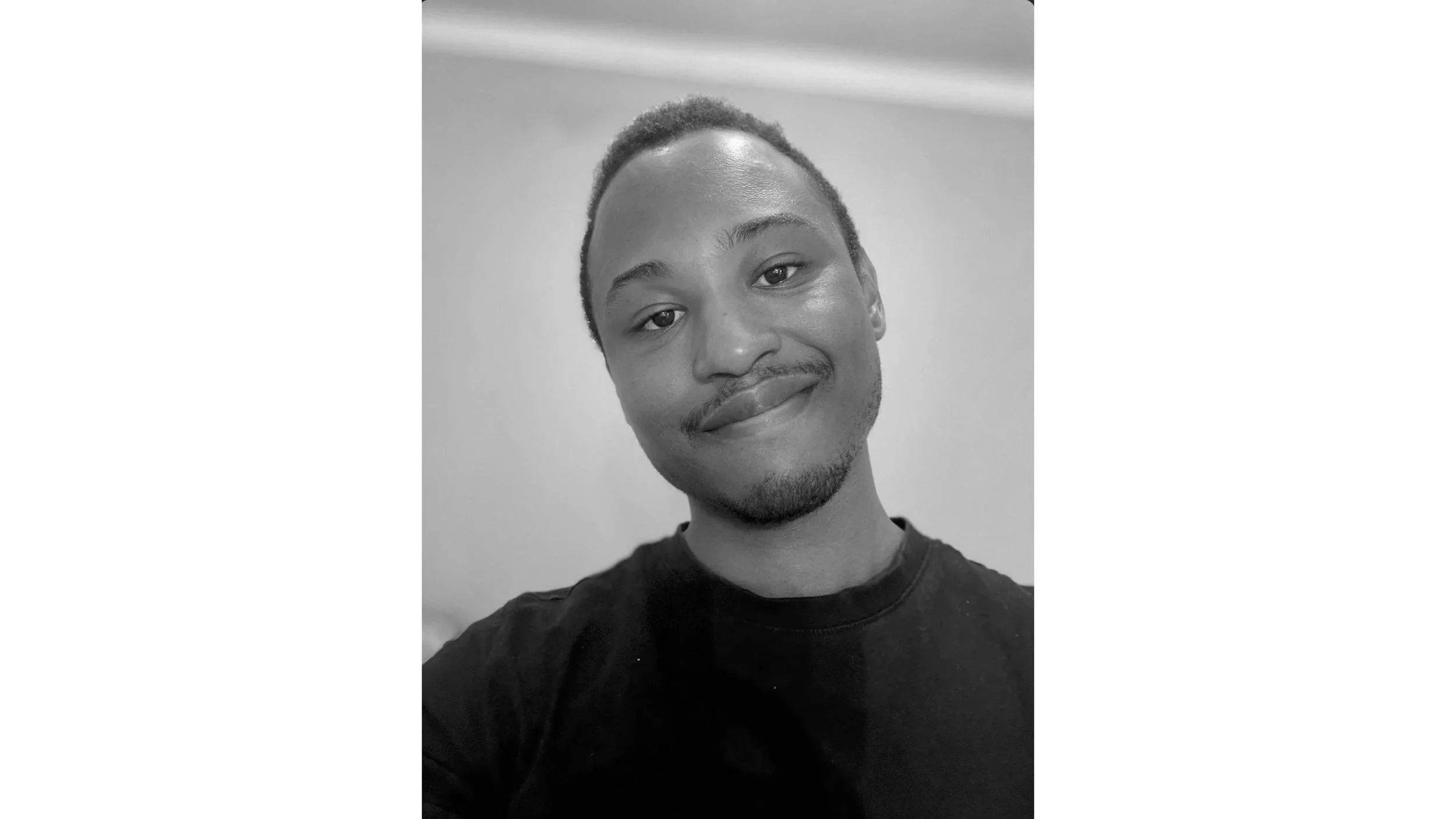
What’s the most straightforward way to explain who you are and what you do?
Describing who I am and what I do in simple terms is a deceptively difficult undertaking. To avoid the trap of being reductive, I’ll explain with as much clarity as I possibly could in as few words.
On a personal level, I am curious, empathetic, and introverted. Professionally, I am a designer—one who thinks, crafts, and executes ideas to make people's lives easier, safer, more inclusive, and more meaningful. In essence, I am a translator: I translate human needs and wants into solutions that serve them (using design framework, process and tools).
Why do you do it?
The drive to make things better is an innate gift I possess—a gift I recognize precisely because it comes so naturally to me. While others may excel in academia or raw cognitive power, my singular strength lies in the ability to see what is and intuitively envision what it could be. Improvement, for me, is not a learned skill but a fundamental instinct.
Ultimately, my motivation is rooted in witnessing the quiet, profound impact of my work. It’s in seeing the designs I helped shape come to life in the hands of diverse users, each interacting with them in unique and unexpected ways. This experience always brings to mind the Greek proverb: “A society grows great when old men plant trees whose shade they know they shall never sit in.”
As designers, we invest countless hours crafting experiences that are meaningful and useful across a spectrum of abilities, identities, and cultures. The silent labor behind accessible design, the cascading effects of countless small decisions made to accommodate as many users as possible, frequently go unnoticed. These choices may never directly benefit us, but they are the seeds we plant. They are our contribution to a more equitable society, built on the quiet hope that the shade we provide will one day shelter others.
What’s your background to get you to where you are today?
So many things have led me to where I am today—and my path to design has been anything but linear. I grew up in Nigeria and studied Fine and Applied Arts at the university level, majoring in Art History while exploring other art disciplines along the way. Art History and Criticism, in particular, shaped how I approach solutions in my craft. Studying the works of renowned artists—their history, medium, context, and the reception of their work—taught me a fundamental lesson: before any idea takes physical or digital form, one must engage deeply with the medium, understand the context or problem being solved, consider location and history, and above all, remain mindful of the people who will ultimately engage with the work.
After graduating, I carried those lessons directly into my design practice. I began freelancing, creating brand assets, editorial systems, and identities for organizations such as UNICEF, the Gates Foundation, and other notable companies and institutions. I did this for about seven years. Then, almost by accident, a friend consulted me to design the visual identity and user experience for a banking mobile app. That project marked my unexpected entry into product design—a space I have called home ever since.
Which digital tools support you best personally and professionally?
I try to keep my tool stack as lean as possible, though it inevitably shifts depending on the design process at hand. For user and team meetings, I rely on Google Meet or Zoom—they're accessible to most people. I use Otter.ai to transcribe recorded interviews, then feed the transcripts into Claude AI for synthesis; it's far more efficient than rereading everything myself, and it helps me catch subtle cues I might otherwise overlook. For visual inspiration, I turn to Pinterest; for competitive analysis and UX trends, Mobbin is my go-to. And when it comes to execution—sharing ideas, annotating designs, and communicating with engineering, product, and cross-functional teams—Figma is my central hub.
Beyond digital tools, I carry a vast mental library of architecture, posters, signage, and art gathered from my travels around the world. After more than a decade in design, I've witnessed countless tools come and go. That experience has taught me not to grow attached to any single one, but rather to optimize what's available and stay adaptable—both as a professional and as a creative who genuinely loves innovation.
That said, the sheer pace at which new design tools and features emerge does give me pause. I don't find it frustrating for myself—I've learned to ride the wave—but I do worry that this rapid proliferation could breed apathy or overwhelm other designers. The pressure to constantly learn new tools, on top of endless feature updates to existing ones, can feel relentless. It's a challenge I hope the industry approaches with more thoughtfulness, so that the craft itself doesn't get lost in the noise.
A niché question but an important one...How aware are you about accessibility?
I am deeply aware of accessibility—though I know the word is often thrown around loosely. The truth is, most designs, if not all, have room to be more accessible. In my current role as a designer at OCM (Open Country Mag) is to improve the digital experience of our readers, executing accessibility has been particularly challenging. Our publishing software's foundation was recently updated with a few long-overdue features—text customisation and an audio reading function for partially sighted users—which we are now working to integrate into our website. Before now, they simply did not exist. We lack the manpower to build our own CMS, so we outsource to a third-party provider, leaving us at the mercy of their innovation. We can only work with the features available at the time.
I am constantly aware of my privilege as an able-bodied person, and accessibility is never far from my mind. Growing up in Nigeria, I was not always conscious of accessibility in a formal sense, but I often wondered about practical ways to help the many physically challenged individuals I saw begging on the roadside—a daily reality that left a lasting impression. I also witnessed close family members rely on voice assistance through Alexa and colour-coded filters to compensate for limitations, making the need for inclusive design deeply personal to me.
My awareness has only sharpened as I've observed how different cultures and countries approach design—sometimes with great consideration, other times with little thought for people with not just visible disabilities but also hidden conditions. Japanese design philosophy and expression, for example, can be visually dense and highly stimulating, which might prove overwhelming for many people with ADHD or autism in the West. It's a reminder that accessibility is not a universal formula; it is deeply contextual, cultural, and human. And it is a responsibility I carry with me in every project, knowing that the choices we make—or fail to make—shape who gets to participate in the world we are building.
And finally, What's the plan for you? Where you heading?
I don't know what the future holds for me. What I do know is that I am grateful for the gift I carry, and I try to hold onto the mindset that if I work hard with the right intentions, opportunities will eventually open up. That said, I don't leave everything to chance. I am deeply aware of the practical realities—the weight of needing employment and the quiet fear of being without work. So I actively leverage my connections and reach out to people doing meaningful work, knowing that community and conversation are often the seeds of opportunity.
I am genuinely excited about the gems of people I've encountered along the way, like you Matt—those who have generously shared tips, insights, and guidance on navigating this industry. Your wisdom has been invaluable.
I am equally excited about the possibilities that AI now places within my reach—the ability to build apps and bring ideas I am passionate about to life, on my own terms. It feels like a chance to take ownership of my future, rather than waiting to be handed an opportunity or chosen by someone else. For the first time, I feel like I can be the one doing the choosing.
Links: Keep up to date with Meka
Website - https://emeka.framer.website
Linkedin - https://www.linkedin.com/in/emekadesign
Email - emekar.design@gmail.com